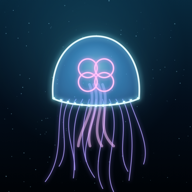
 A life simulator
A sea that
evolves.
A dark sea where glowing creatures drift, feed, hunt and court. Each one carries its own genes, and their young carry them on, a little changed. Nothing is scripted: new species branch off, mingle, thrive and vanish, while you watch.
Coming soon to the App Store. iPhone and iPad with iOS 18, Mac with macOS 26, Apple TV.
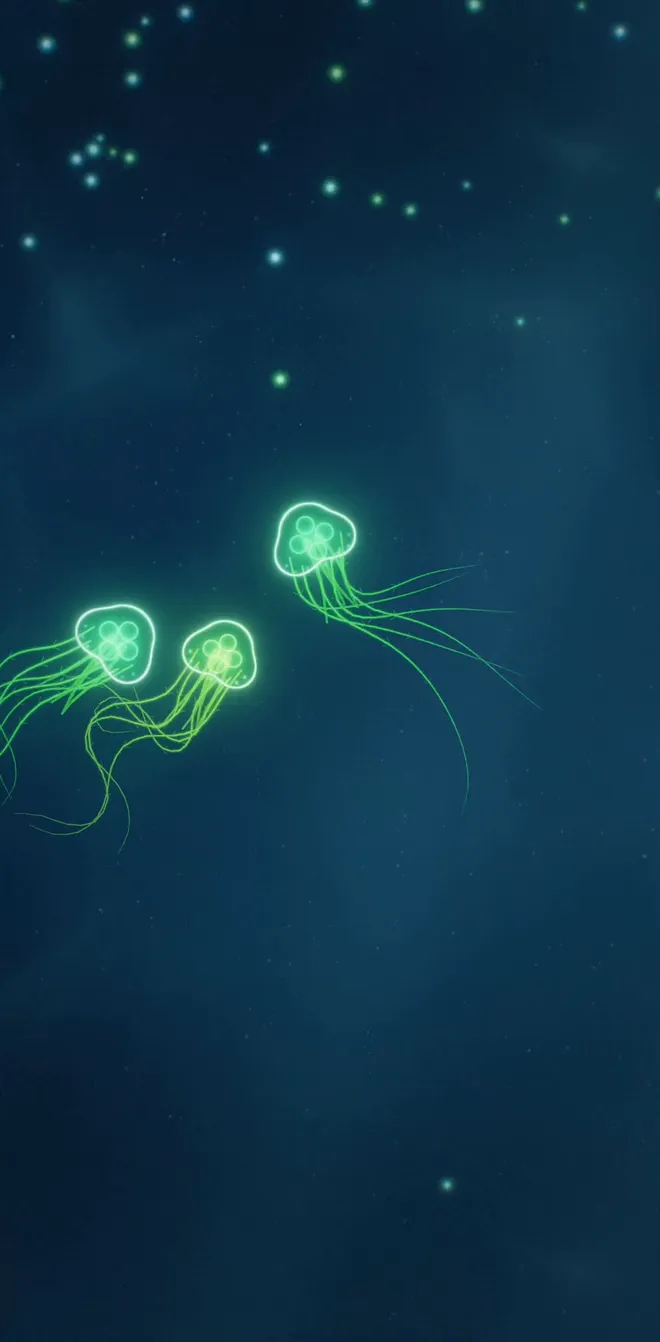
Six body plans, and three rare ones
Every creature is written in its genes.
One genome can grow a drifter, a medusa or a ray, as a grazer, a hunter or something in between. Each plan keeps to its own depth and lives on food only it can reach, so they share the sea.
Drifter
Small and many, grazing the plankton that sparkles in every wake.
Medusa
A pulsing bell and long trailing tentacles, feeding in the light near the surface.
Serpent
A long, banded body that winds down to the mats around the warm springs.
Comb jelly
Rows of rainbow cilia. It rises at night after the copepods and sinks again at dawn.
Radiolarian
A star of glassy spines, living on the marine snow that falls from above.
Ray
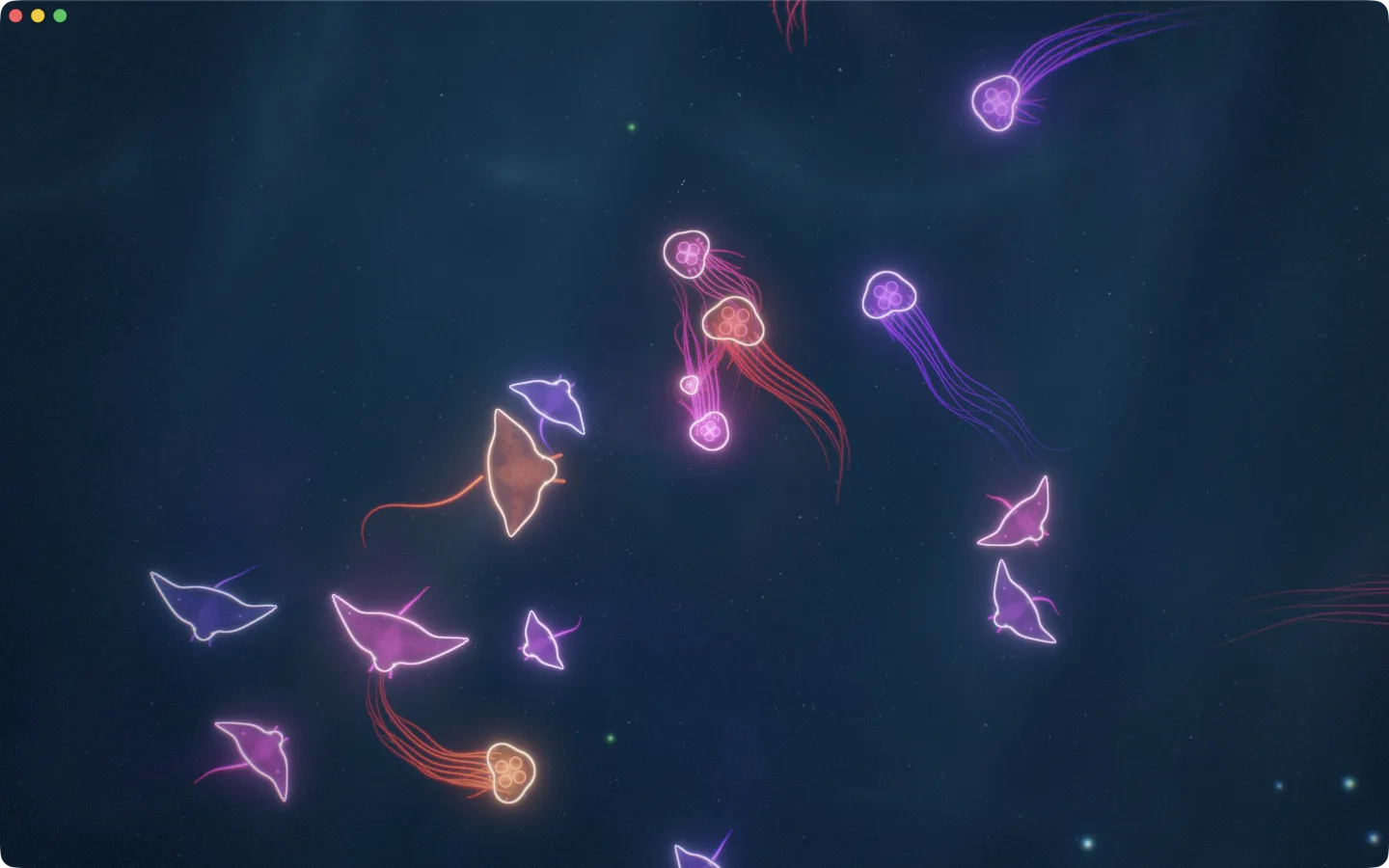
Wide wings and a whip of a tail. It glides in schools and filters the water.
Rare visitors from the open ocean
Nautilus
A coiled shell from the open ocean, rising at night.
Sea angel
A small winged hunter, translucent and quick.
Volvox
A rolling green colony that lives on sunlight.
Nothing is scripted
Species branch, mingle and vanish.
Leave it running and the sea writes its own natural history. No two seas turn out alike.
Twenty-three genes
Size, shape, colour, depth, speed, appetite and more. Every newborn mixes its parents’ genes, or buds alone, with a few small mutations.
New species
When a lineage drifts far enough from its founder it becomes a species of its own, named and described by what changed: larger, deeper-dwelling, hungrier for flesh.
Hybrids
Crowded among another species of its body plan, with none of its own kind near, a creature may take a stranger as a partner. Their young can found a hybrid species, named the botanists’ way: Genus × epithet.
Rare colourings
About once in 300 births: albino, golden, iridescent or shadow. They run in families.
Kelp meadows
Luminous kelp rooted in the seabed grows, is grazed, sheds spores that drift and take root, and wanders across the floor over hours.
The sea turns
Every few minutes: a plankton bloom, a warm spring erupting, a night of mass spawning, or a patch of dead water that life flees. Now and then, something vast passes through the deep.
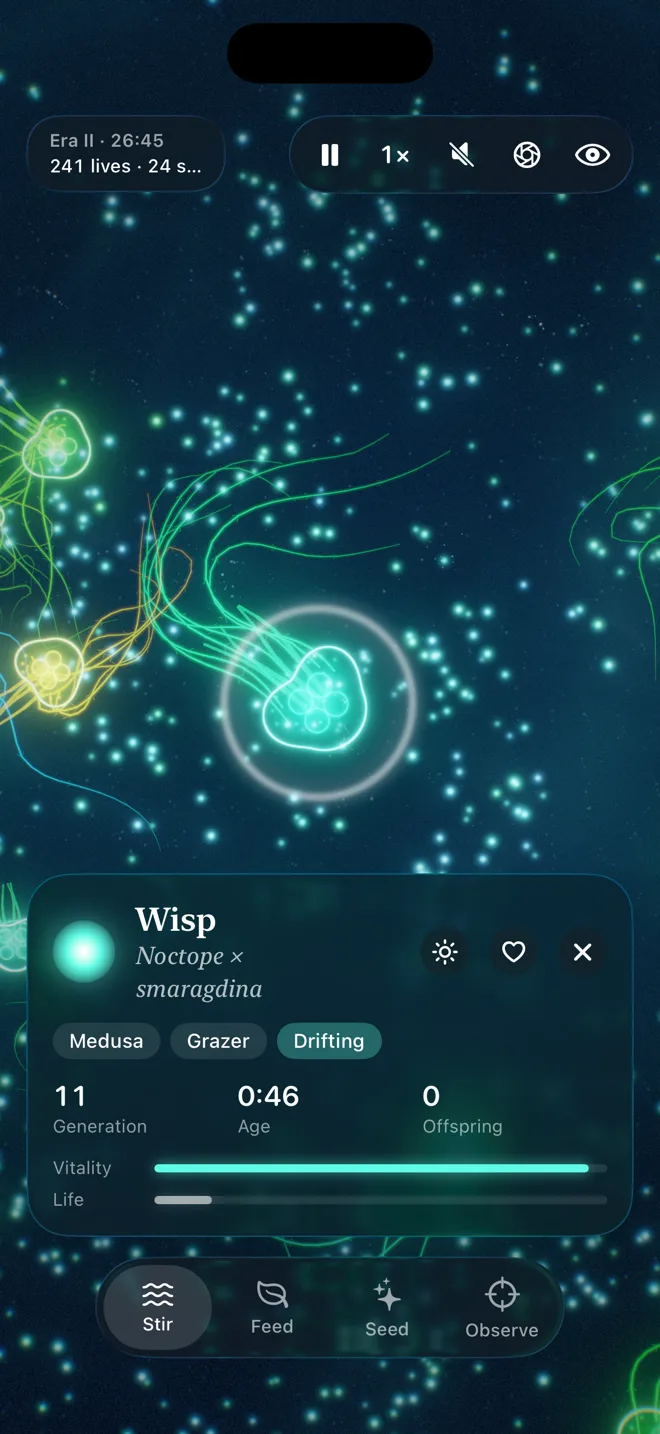
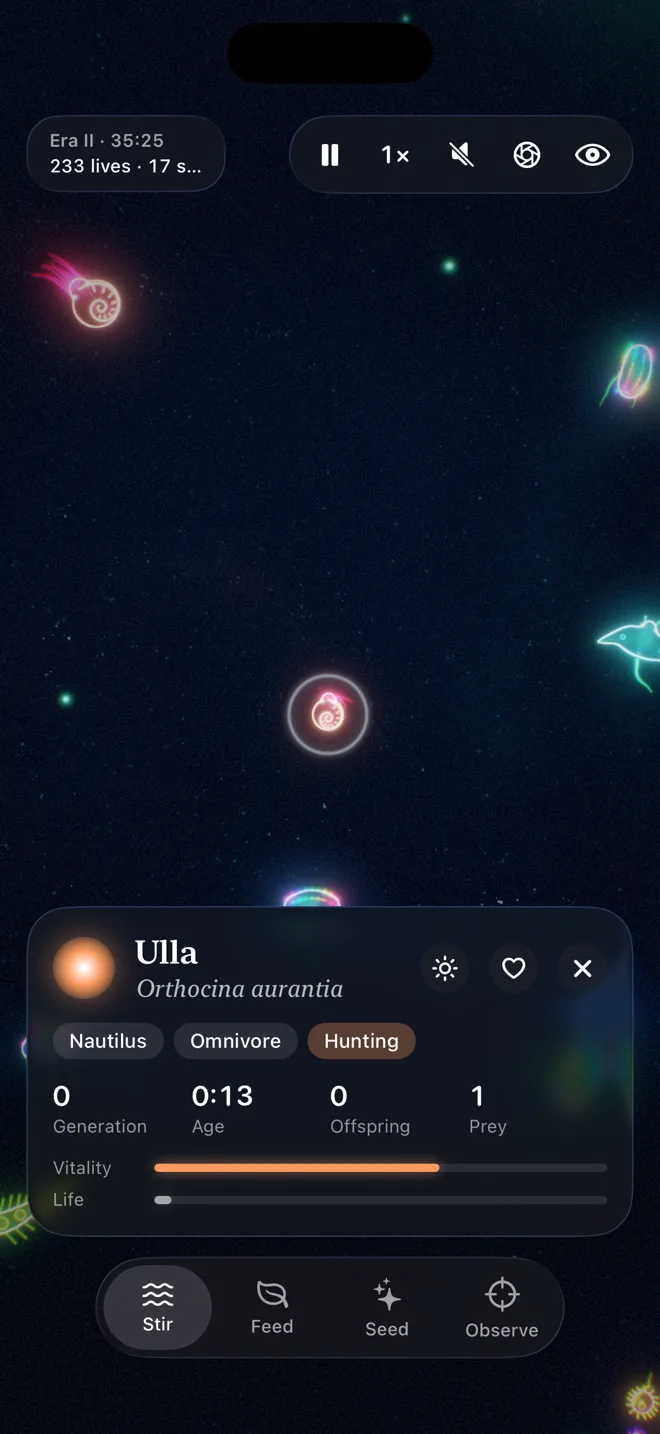
Four tools, and your favourites
Stir it, feed it, seed it, follow it.
You can nudge the sea, never steer it. What becomes of what you do is up to the life in it.
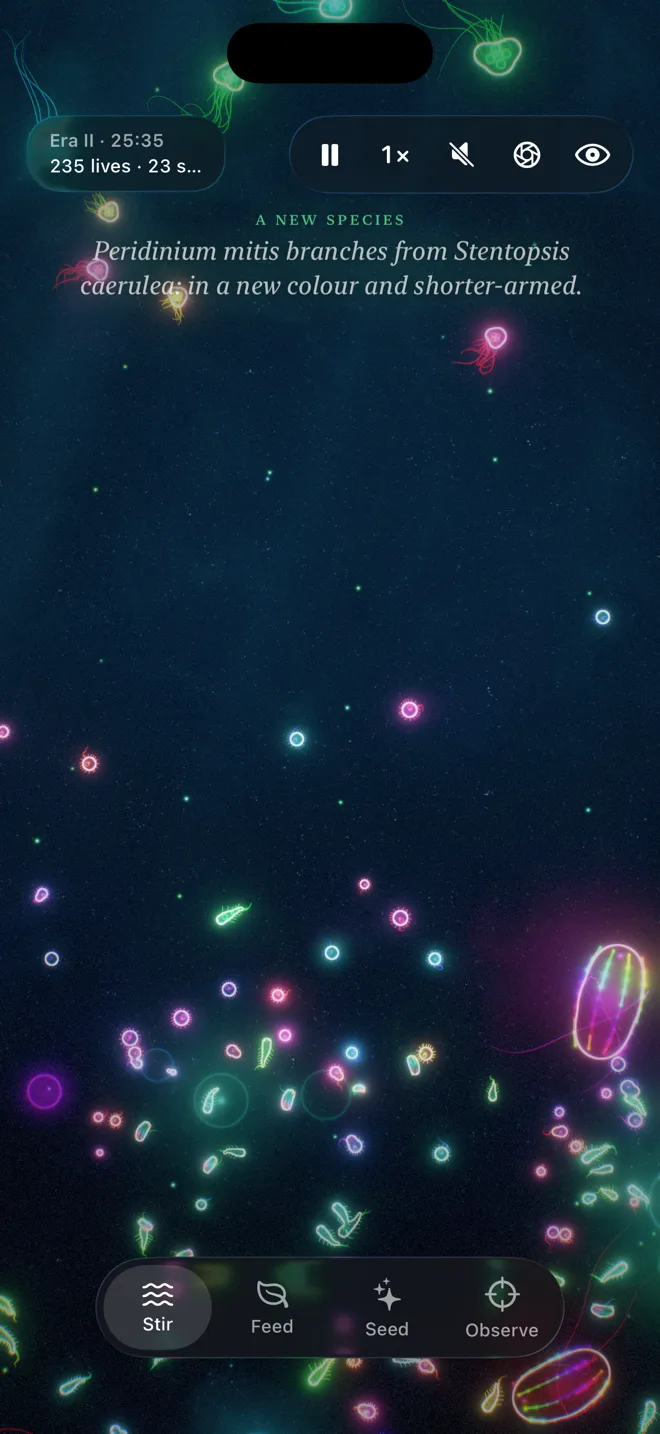
Stir
Drag through the water and the current follows your finger, carrying dye, marine snow and anyone in the way.
Feed
Scatter food and watch who comes, who fattens and who breeds.
Seed
Start a new life of your own, plant a young kelp meadow, or open a warm spring in the seabed.
Observe
Tap any creature to follow it: its name, species, generation, age, offspring and how much life it has left.
Favour
Up to three creatures at a time: a favoured one ages slowly, raises more young and wears a soft corona.
Adopt a family
Take one creature to heart and follow every descendant born after it, generation after generation.
A natural history
Everything that ever lived, on record.
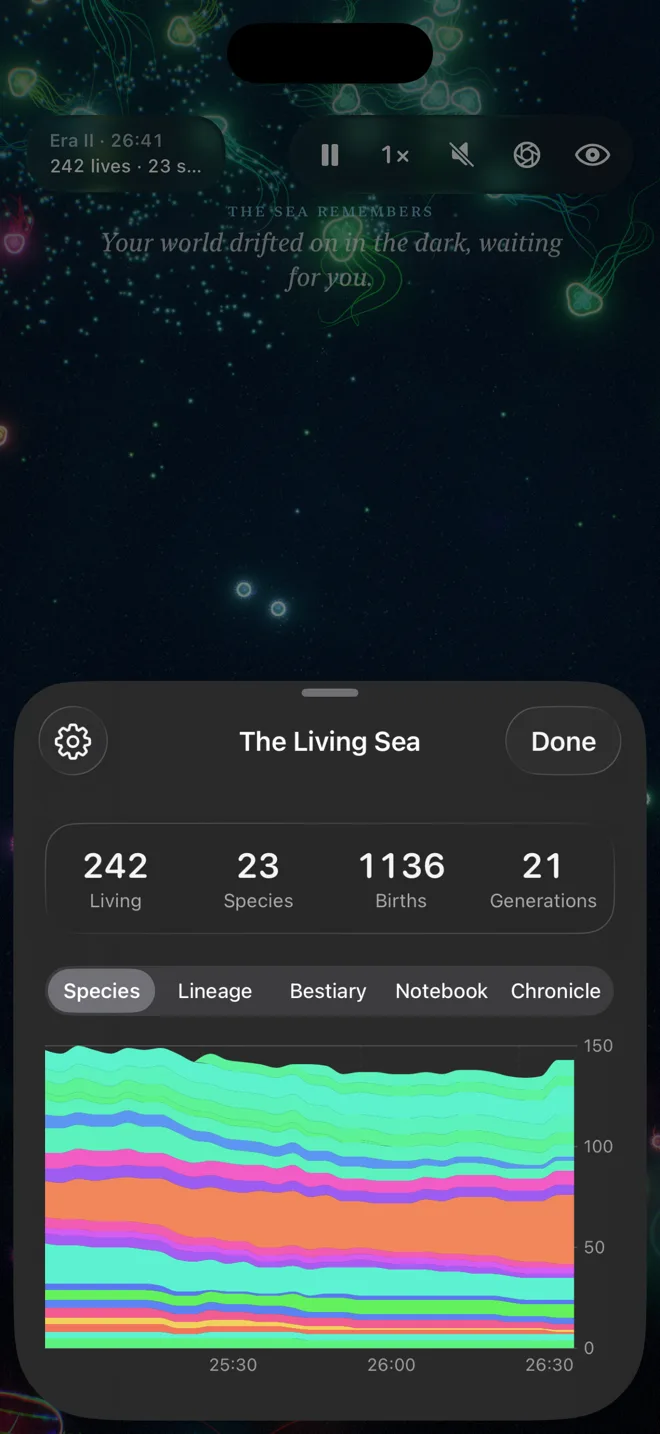
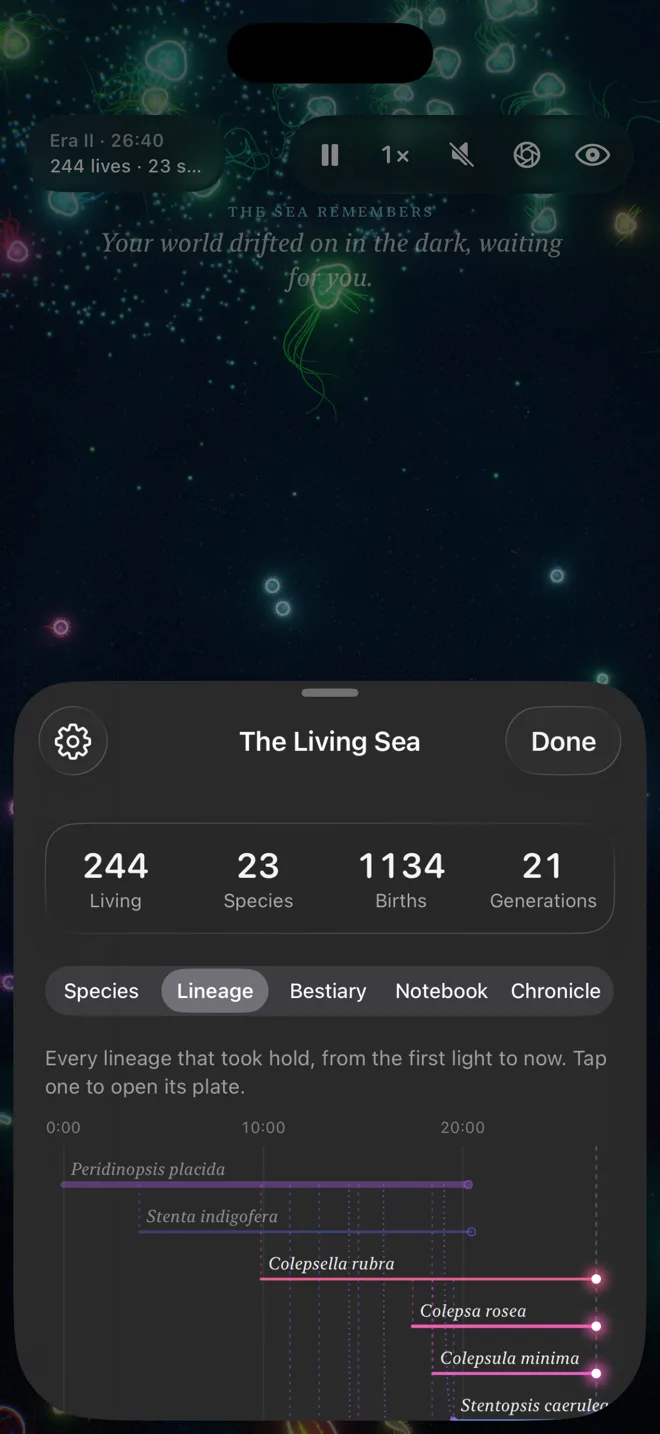
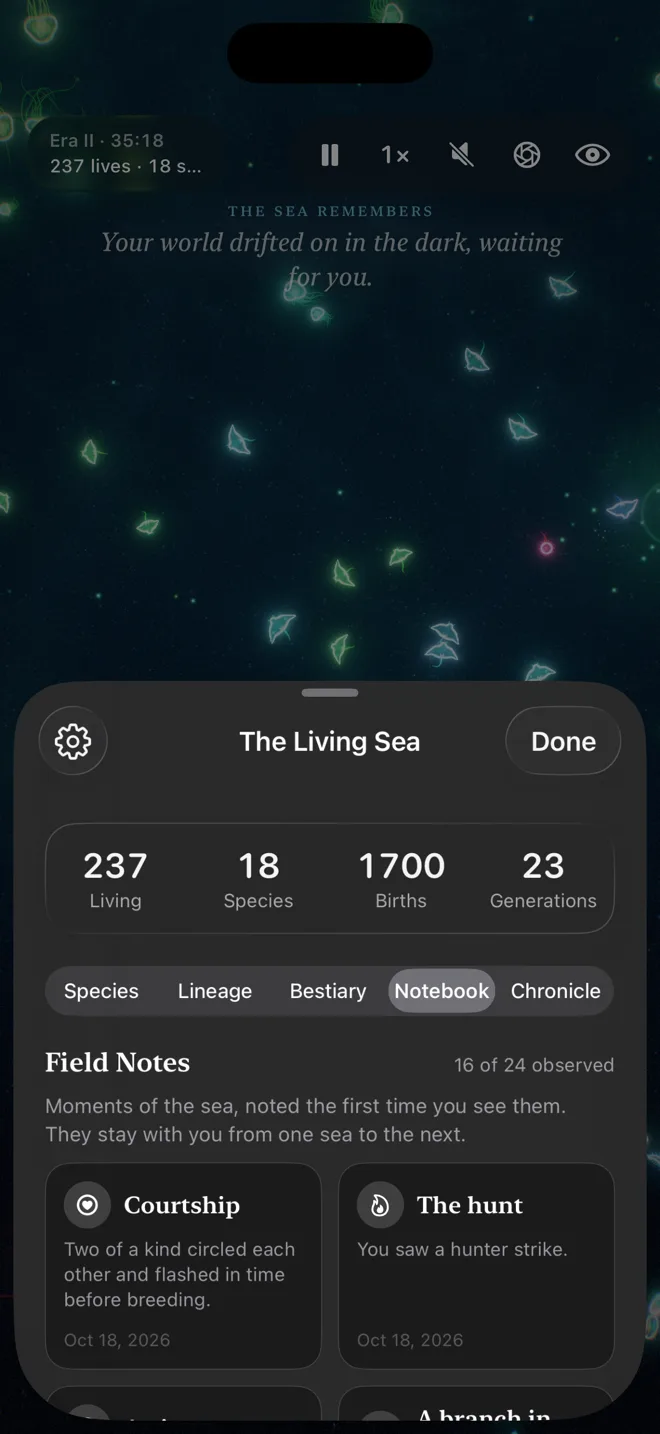
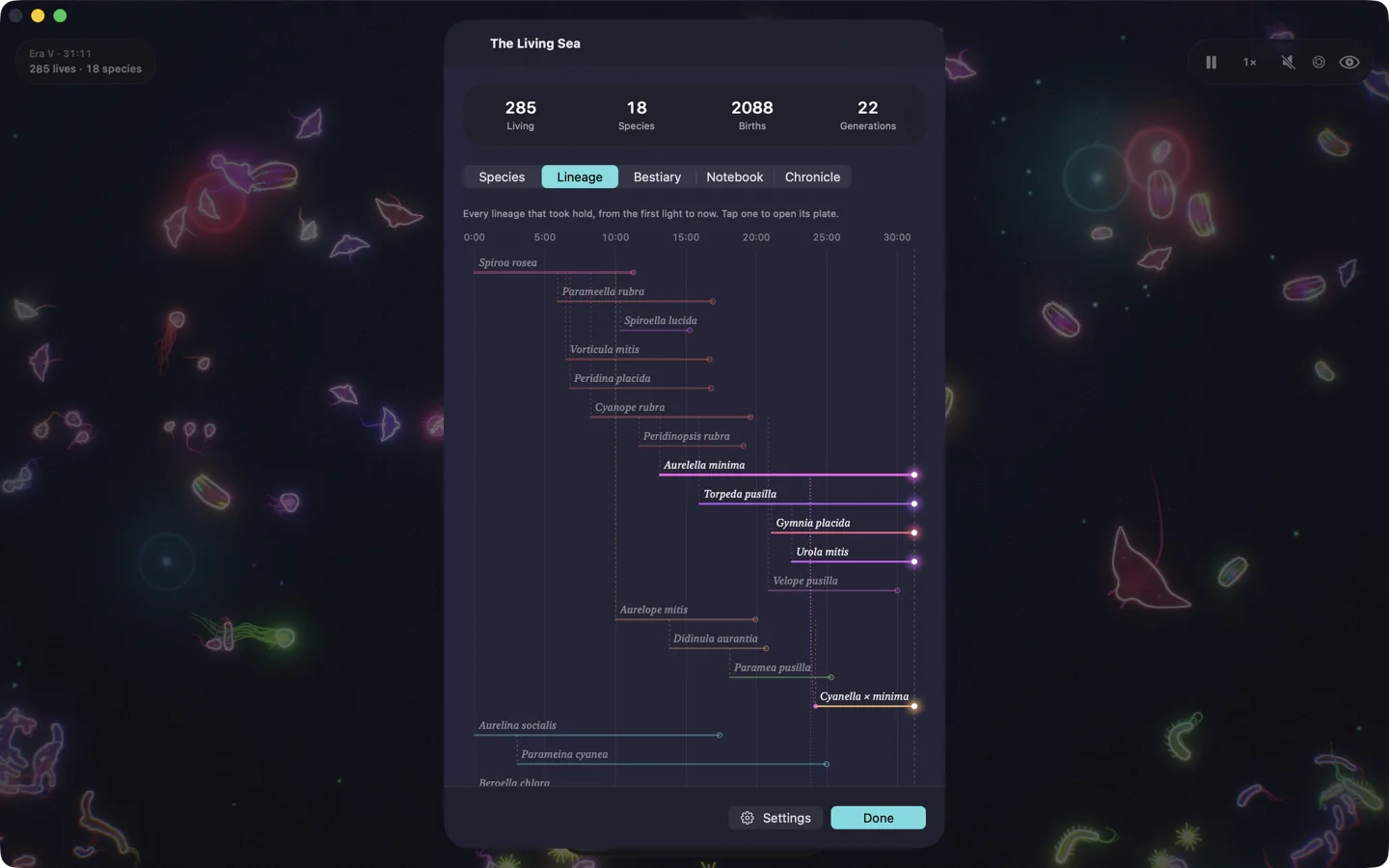
A census of every species through the whole life of the sea, a tree of life that scrolls and zooms through time, a bestiary, a chronicle, and a notebook of moments you witnessed yourself.
Day, night and the moon
It goes on without you.
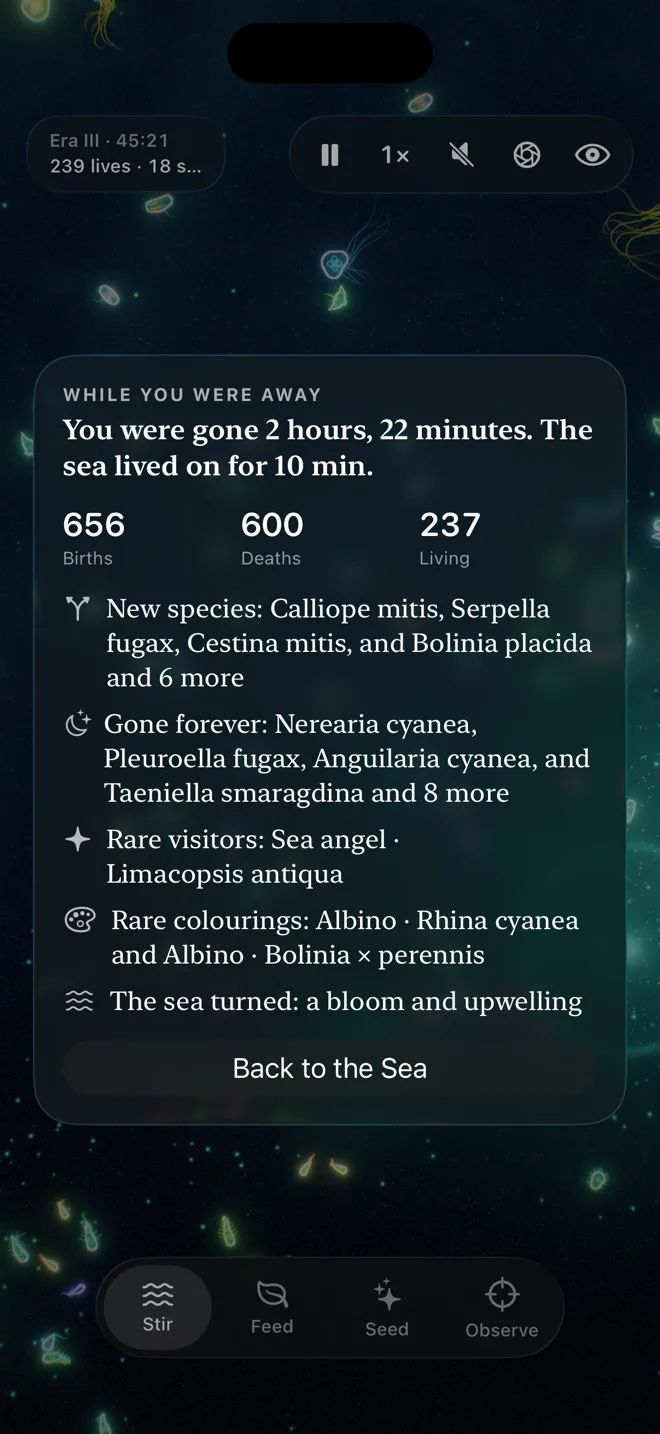
The sea keeps its own hours, or yours. Close the app and it drifts on in the dark; open it again and it tells you what you missed.
It lives on
Come back after a while and the sea catches up on a tenth of the time you were gone, up to ten minutes of its life, then tells you what happened.
Day and night
A twelve-minute cycle from noon to the deepest night, or the sun where you are, or a light held still. Some lives only rise at night.
The real full moon
On full moon nights the sea spawns, as a coral reef does.
Two notifications, if you want them
A full moon night, and your family down to its last few. Nothing else, and only if you turn them on.
On the Mac and Apple TV
A window onto the deep.
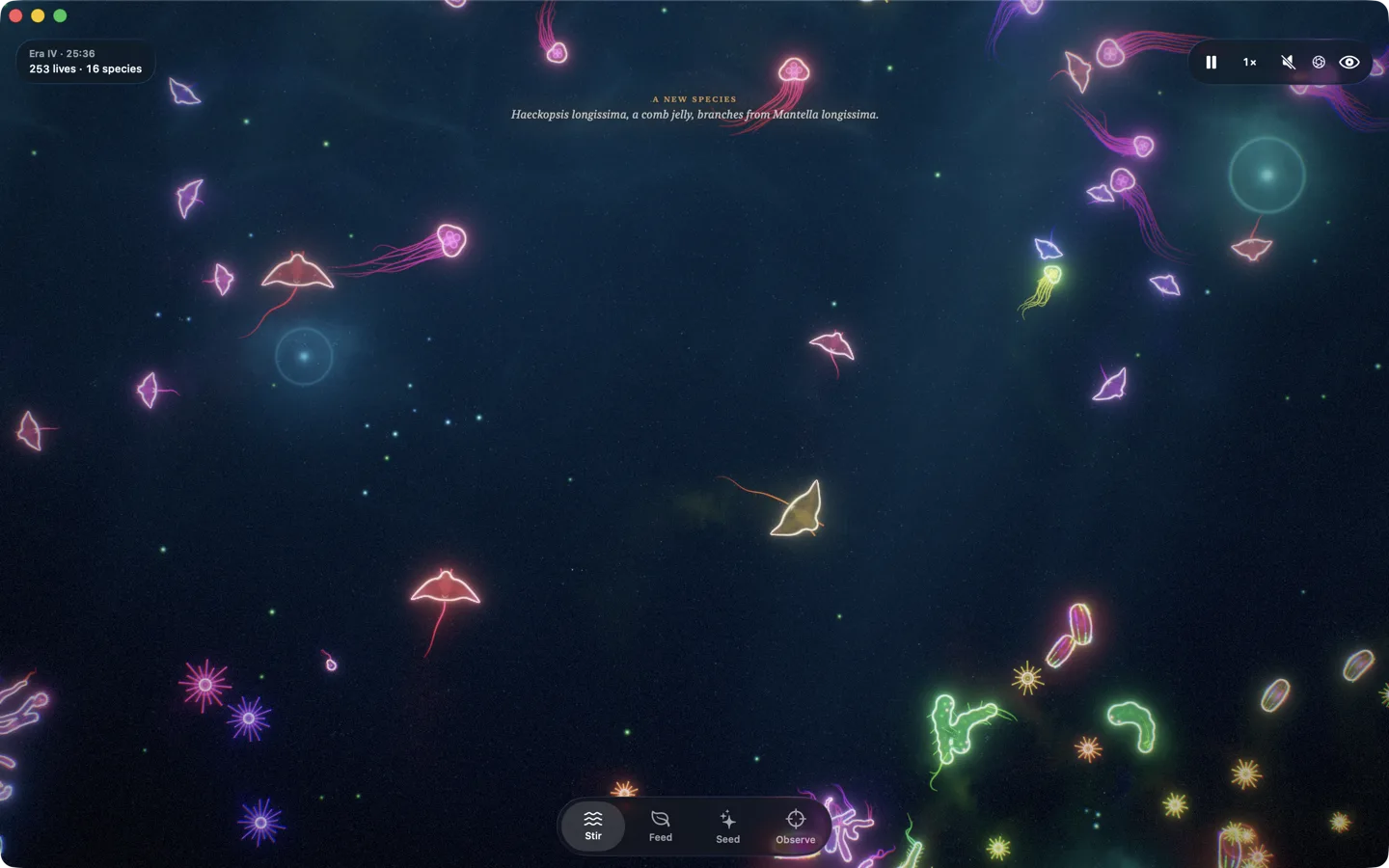
The same sea, drawn for the big screen. Leave it open beside your work, or let it take over the room.
Any window, any size
Keep the sea small beside your work, or go full screen and let it fill the room.
Made for the trackpad
Pinch to come closer, scroll with two fingers to travel, and ⌘0 to step back and see the whole sea.
Widgets
On the desktop and the Home Screen, a portrait of your own sea: how many live, and some of who lives there.
And on Apple TV
Lean back: the sea plays as a documentary, cutting between shots with a caption for what is happening.
At your fingertips
- Stir, feed, seed or observe
- 1–4
- Pause
- Space
- Contemplate
- C
- Photo mode
- P
- Sound on or off
- M
- The whole sea
- ⌘0
- Settings
- ⌘,
Made to watch
Hypnotic, on purpose.
Put it on while you think, read or wind down. It never asks for anything.
Contemplation mode
Hide everything and let the camera choose: close on a hunter, a courting pair, a rare visitor, then out to the whole sea.
Sound that is never the same
Slow drones, a tide of soft noise, a bell for every birth and death, all generated as you listen and fading with distance.
Photo mode
Freeze the sea, frame it and keep the picture, or share it.
Twelve-second moments
Record what you’re watching, sound included, and send it on.
Water you can feel
A fluid simulation carries dye and marine snow, soft bodies glow through it, and the light shifts with the hour.
Always where you left it
Your sea, its history and your notes are saved on your device and waiting next time.
Privacy
Your sea stays with you.
No servers, no accounts, no network at all. Primordia runs entirely on your device.
Only on your device
Primordia makes no network requests. Your sea never leaves your iPhone, iPad, Mac or Apple TV.
No account
Nothing to sign up for. No analytics, no tracking.
No ads
Nothing interrupts the sea, and it only notifies you if you ask.
The details are in the privacy policy.
Questions
When can I get it?
It’s coming to the App Store for iPhone, iPad, Mac and Apple TV. Follow us on Instagram with the button and you’ll hear the day it’s out.
Which devices does it run on?
iPhone and iPad with iOS 18 or later, Mac with macOS 26 or later, and Apple TV with tvOS 18 or later.
Is it a game?
Not one you can win. There are no goals or scores: you can stir, feed, seed and favour, but the sea decides what becomes of it. Many people just leave it on and watch.
Is anything scripted?
No. Every creature’s look and behaviour come from its genes, and every species in your sea arose there. Two seas never turn out alike.
What happens when I close it?
The sea is saved. When you come back after a while, it lives on for a tenth of the time you were away, up to ten minutes, and tells you what happened. You can turn that off in Settings.
How many creatures can it hold?
Food decides, more than any number: the population rises and falls with blooms and predators. In Settings you can set a limit, from 30 to 500.
Does it need the internet?
No. Everything happens on your device, so it works the same on a plane.
Which languages?
English and Spanish.
Life, from the first light.
Primordia is coming to iPhone, iPad, Mac and Apple TV. Follow us and you’ll hear the day it’s out.
Made in Buenos Aires by SIUX.